There is something terribly difficult about watching someone you love slowly change before your eyes. They still sit across from you, speak to you, argue with you and occasionally remind you of the person you have known all your life. Yet, you can sense that something is changing, and there is very little you can do about it.
I watched The Father, starring Anthony Hopkins and Olivia Colman, with a lump in my throat almost throughout the film. I knew what the film was about before I started watching it, but I hadn’t anticipated just how familiar it would feel.
My father has dementia. And perhaps that is why this film was so triggering.
When Reality Becomes Unreliable
The Father follows Anthony, an ageing man living with dementia, and his daughter Anne, who is trying to care for him while managing her own life.
We have seen films about ageing parents and the difficulties of caring for them before. But this movie does something rather extraordinary. It puts us inside the mind of someone whose understanding of reality is falling apart.
People change faces. Rooms look familiar until they don’t. Conversations seem to repeat themselves, and events we thought we understood turn out to have happened differently. Sometimes we aren’t even sure where Anthony is living or who the people around him are.
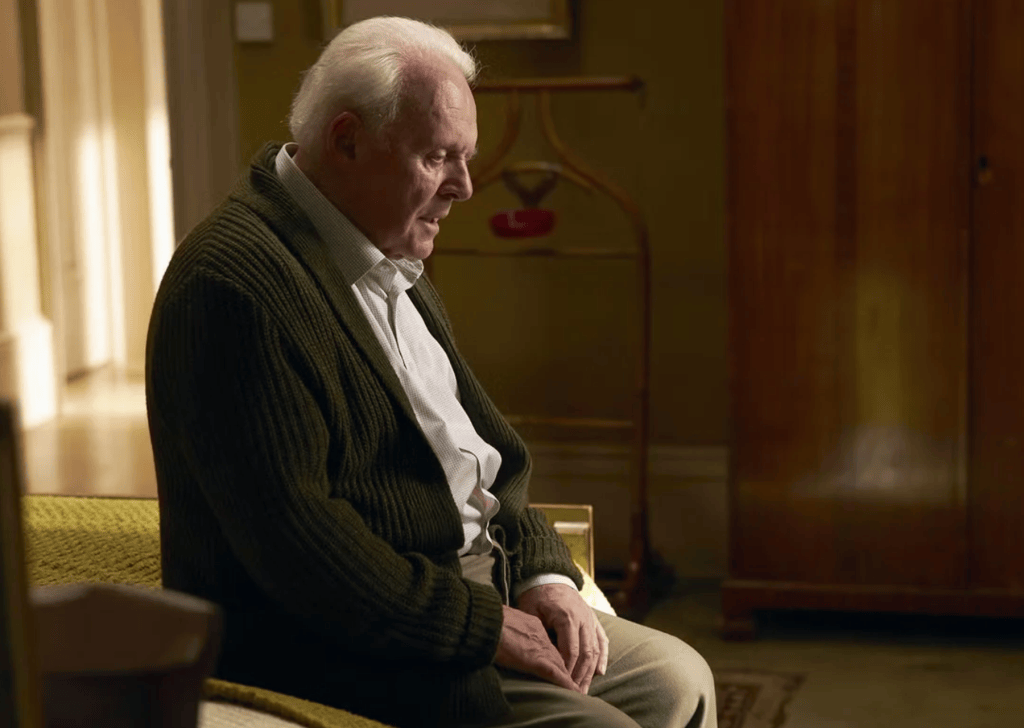
The film makes us question our own memory of what we have just watched. We experience Anthony’s confusion instead of simply observing it from a comfortable distance.
Imagine living like that every single day.
What makes the film particularly unsettling is how ordinary everything looks. There are no elaborate visual effects or dramatic attempts to frighten the audience. The screenplay is remarkably clever, and the direction makes even the smallest changes feel significant.
And then there is Anthony Hopkins.
Anthony Hopkins, at His Absolute Best
I have always admired Anthony Hopkins as an actor, but his performance in The Father is something else.
At one moment, Anthony is charming and funny, making jokes and entertaining the people around him. The next moment, he is suspicious, angry, arrogant or downright nasty. He accuses people of stealing from him, insists that everyone else is wrong and refuses to accept that he might need help. And then, without warning, he becomes a frightened old man who cannot understand what is happening to him.
Hopkins moves between these emotions so naturally that you almost forget you are watching someone act. There is no attempt to make Anthony consistently likeable. In fact, he can be incredibly difficult to tolerate, and that is precisely what makes the performance so convincing.
I recognised so much of my father in Anthony.
When Someone You Love Refuses Help
My dad has always been someone who prefers doing things his own way, and accepting help isn’t always easy for him. Now, with dementia, that resistance has become one of the most difficult things to deal with. He lives in denial about his condition and refuses treatment, even when the need for help seems painfully obvious to those around him. How do you convince someone that something is wrong when they refuse to believe you? How do you help a parent who insists that they don’t need help? And how many times can you have the same conversation before frustration sets in? I wish I had answers.
There are days when I get frustrated with him and wish I could somehow make him understand what is happening. But that frustration is often followed by guilt, because I know his illness makes it difficult for him to recognise and accept the changes he is going through.
I think that is one of the things The Father gets painfully right. Anne loves her father, but she is also exhausted. She worries about his safety, struggles with his accusations and tries to make decisions that he cannot or will not accept.
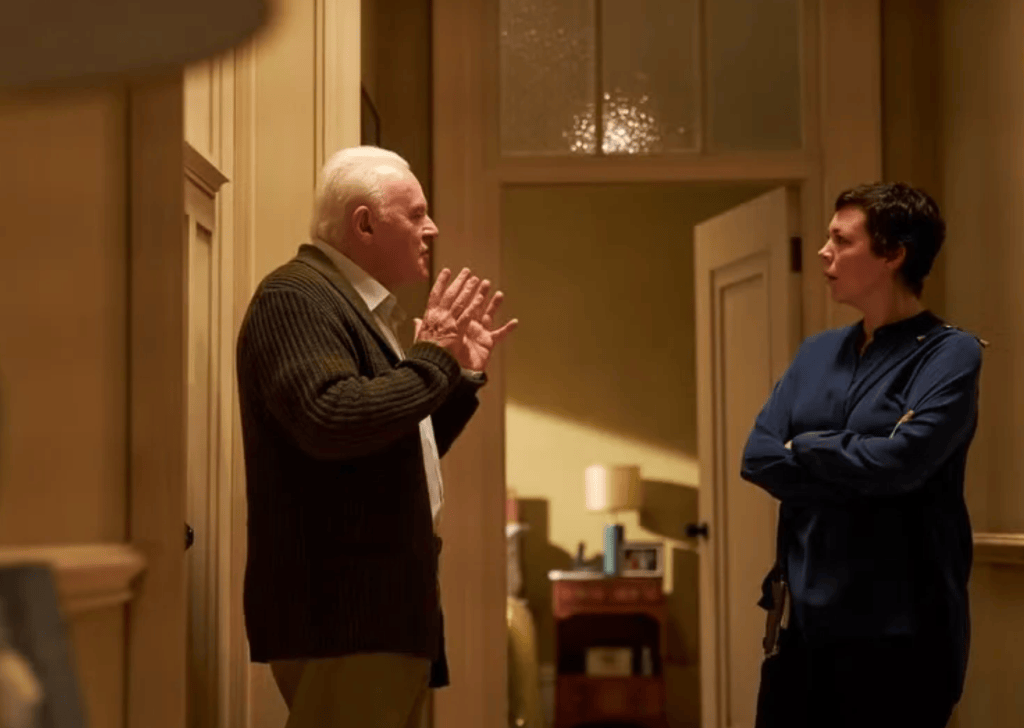
Olivia Colman’s performance deserves enormous credit here. She captures the exhaustion of an adult child who is expected to have answers when there are none. You can see her trying to remain composed even when she is clearly struggling.
Watching her made me think about the strange position I find myself in.
The Other Side of Growing Up
As an adult, I have built a life of my own. I work, earn, make my own decisions and enjoy the independence that comes with growing older. There is something wonderful about reaching a stage in life where you finally feel like you belong to yourself.
But nobody really prepares you for the other side of growing up.
While you are busy becoming independent, your parents are growing older. The people who once made decisions for you begin needing you to make decisions for them. The people you thought would always know better suddenly don’t.
And the freedom you have worked so hard to build comes with the frightening realisation that you cannot protect the people you love from everything. And that fear keeps eating away at me. I worry about how much worse things might become, whether I am doing enough…
The illness has also created a distance between my father and me that I don’t quite know how to bridge. Conversations are different now. His refusal to acknowledge his condition makes it difficult to reach him, and I sometimes find myself withdrawing because I simply don’t know how to deal with it anymore. There is guilt in that distance too. I know time is precious, but knowing that doesn’t automatically make every interaction easier.
And then there are those little moments when everything feels almost normal again. He’ll buy me a Thums Up or a Bournville, make coffee for me, or we’ll manage to have a proper conversation without the confusion and frustration getting in the way. I still remember how, years ago, when I desperately wanted the Shah Rukh Khan poster displayed outside the screen during Fan, he actually went and requested the theatre manager to let me have it and that night the two of us set it up in my room. It’s these little things about my dad that I hold on to. They’re such ordinary things, things I might not even have thought twice about three years ago. But now I find myself craving them. I look forward to those moments because, for a little while, I get to be his daughter without having to worry about his dementia.
Perhaps that’s why I miss him sometimes, even when he’s right there. I miss the ease with which we could once spend time together, without every conversation carrying an underlying worry.
The Scene That Finally Broke Me
One of the most devastating moments in The Father comes towards the end, when Anthony breaks down and cries for his mother.
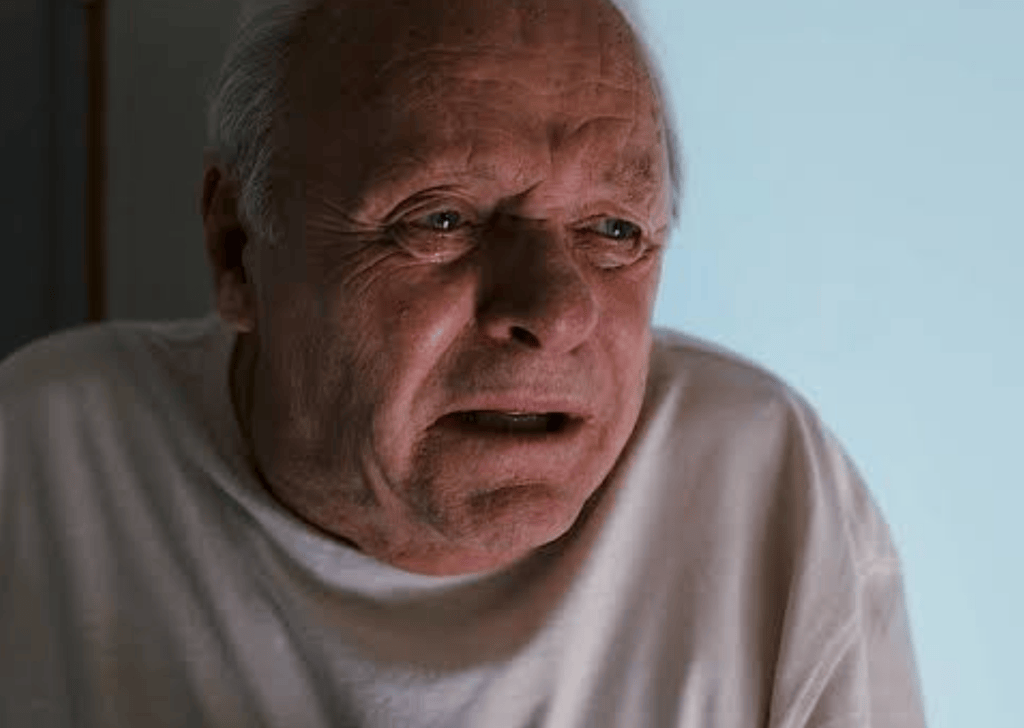
After all the arrogance, accusations and desperate attempts to remain in control, he is suddenly a frightened child who wants someone familiar to comfort him.
This was where I finally broke down. I could see the frightened person beneath all that stubbornness and anger. I wondered whether my own father sometimes feels that way but cannot express it.
Hopkins is extraordinary in this scene. The way his voice changes, the helplessness in his expression and the simplicity of his need for his mother are enough to leave you shattered.
I found myself wondering what it must feel like to be trapped inside a mind that you can no longer trust.
We often talk about dementia in terms of what families lose. Their loved one’s memory, personality, independence and ability to recognise them. But the film nudges us to consider what the person living with dementia is experiencing too. The confusion, humiliation, suspicion and fear. The desperate need to hold on to some control when everything seems to be changing without your permission.
Finding Comfort in an Uncomfortable Film
Strangely enough, despite how upsetting The Father was, I also found it comforting.
There is a certain loneliness that comes with watching a parent live with dementia. You see things other people don’t. You deal with conversations and situations that are difficult to explain to someone who hasn’t experienced them. Sometimes you begin to wonder whether anyone else really understands what your everyday life looks like.
Watching Anne struggle with her father reminded me that my dad and I aren’t the only people going through something like this. There are so many families dealing with similar situations, trying to figure out how to care for someone while continuing to live their own lives.
Of course, knowing that other people are struggling doesn’t make things easier at home. But there was something reassuring about seeing experiences I have found difficult to explain represented so accurately on screen.
For two hours, I watched someone else deal with the same contradictions that trouble me. The love and the anger, the responsibility and the resentment, the desire to help and the exhaustion that comes with trying.
A Film I Wish Hadn’t Felt So Familiar
The Father is an exceptional film. It doesn’t tell us how we should feel about its characters, and that makes their relationships all the more believable. Perhaps I would have admired it just as much if I had watched it at another point in my life. I began watching expecting a brilliant performance from Anthony Hopkins. I got that, and much more than I had bargained for. I cried, I recognised things I wish I didn’t have to recognise, and I thought about my dad long after the credits rolled.
But for all the sadness the film brought up, it also left me feeling a little less alone.

